
For organizations
You have funded leadership programs before. You could not show what changed.
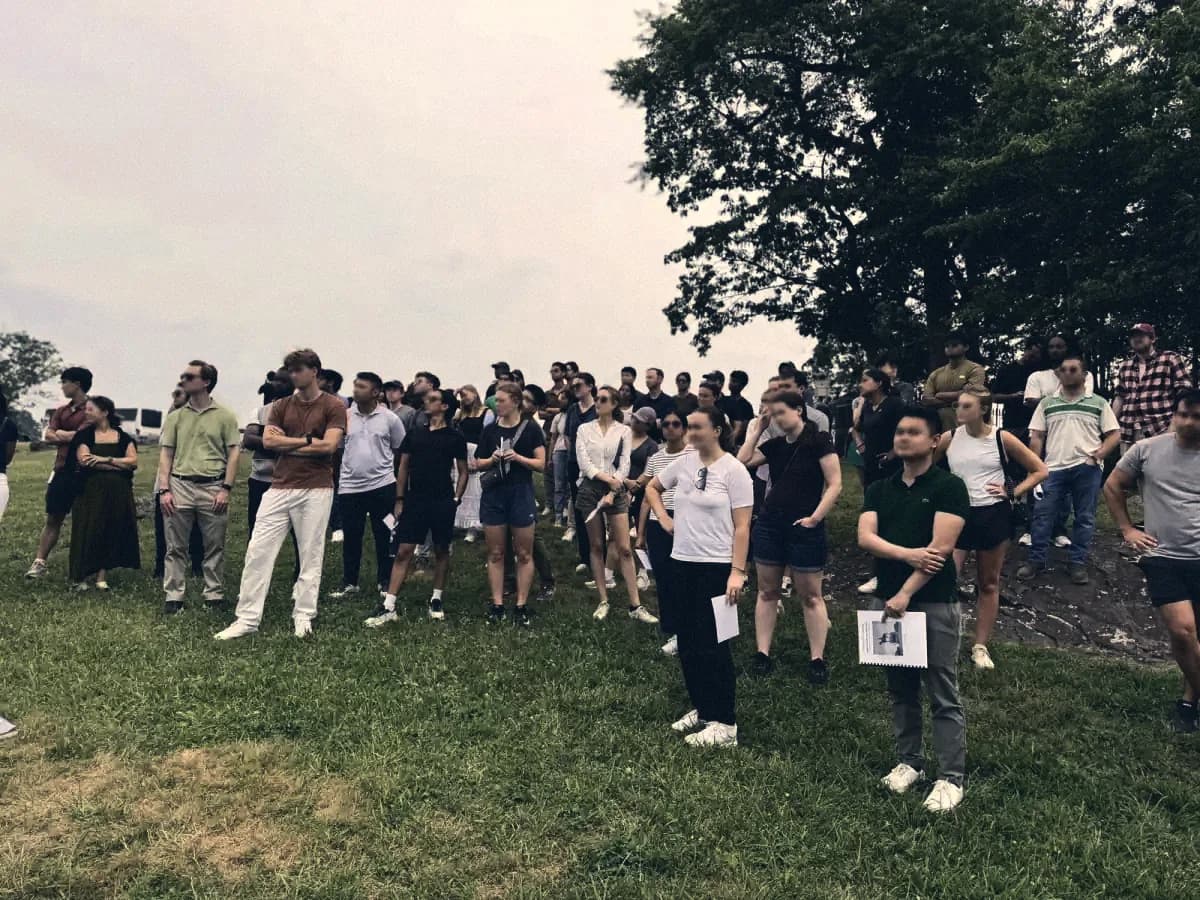
You know how it went. People came back energized and the scores were good. Six weeks later nothing had changed. Nobody said so, because the content was fine and the facilitator was excellent.
Two things were missing. The practice never touched a problem your organization actually has, so leaders went back to desks where the hypotheticals don't live. And nothing followed them. The binder went in a drawer, and the only number anyone collected was a satisfaction score taken while the room still felt good.
Here, leaders practice inside real decisions with the ending sealed. Each decision comes back as a commitment aimed at work your organization named before the first case. Their manager and their team are asked what changed at the start and again at the end. For six months after, the work keeps coming back.
If you don't want the part after, there are cheaper ways to get the result you got last time.
Where typical programs stop short
Most programs teach one step of five.
A hard call starts well before the meeting where it gets made, and it lasts for quarters afterwards. Typical programs train the meeting.
- 01
Notice
See the problem early
- 02
Frame
Find the real question
- 03
Counsel
Ask the people who disagree
- 04
Decide
Make the call on time
Typical programs train this step
- 05
Carry
Hold it, explain it, change it openly
Lived Path trains all five
What happens after the last day.
A typical program ends with a survey while the room still feels good. Here the last session is the middle of the story.
The year: two retreats, four field days, twelve cases · Six months of two-minute prompts
Rated before the first case
Rated after the twelfth, and the team writes back
Checked at three and six months
How this is different.
| Topic | Typical leadership program | Lived Path |
|---|---|---|
| What is trained | The moment of choice: frameworks and checklists once a decision is already on the table | The whole arc: notice early, frame the real question, seek counsel from people who disagree, decide on time, and carry the consequence |
| The practice | Discuss a framework; the outcome is usually known or hypothetical | Commit before the outcome is known, then lead through the consequence of that same commitment |
| Handling dissent | Rarely practiced; agreement is often treated as alignment | Practiced every week against a case coach that argues the other side |
| The homework | A reflection exercise about the session | Live applications aimed at a problem your business unit named |
| Who is in the room | Mixed public cohort; people stay general | One company per cohort, so leaders can name real problems without performing for strangers |
| What is reported | Satisfaction and completion | Four observable behaviors, rated by the leader and their manager. Separately, what the people they work with said helped and what got in the way. |
| When it is measured | On the last day, or in a survey shortly after | Before the first case, after the twelfth, and again three and six months later, on the same scale, so you can see whether it held |
| Manager involvement | Optional briefing | A check-in every stretch, tracked and visible to the sponsor |
What your leaders work in.
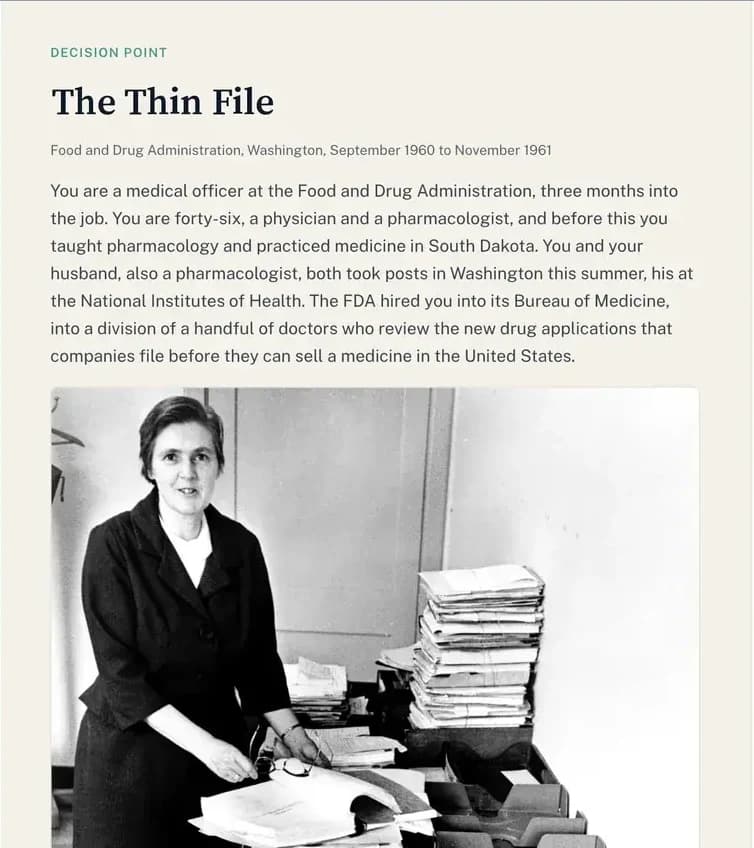
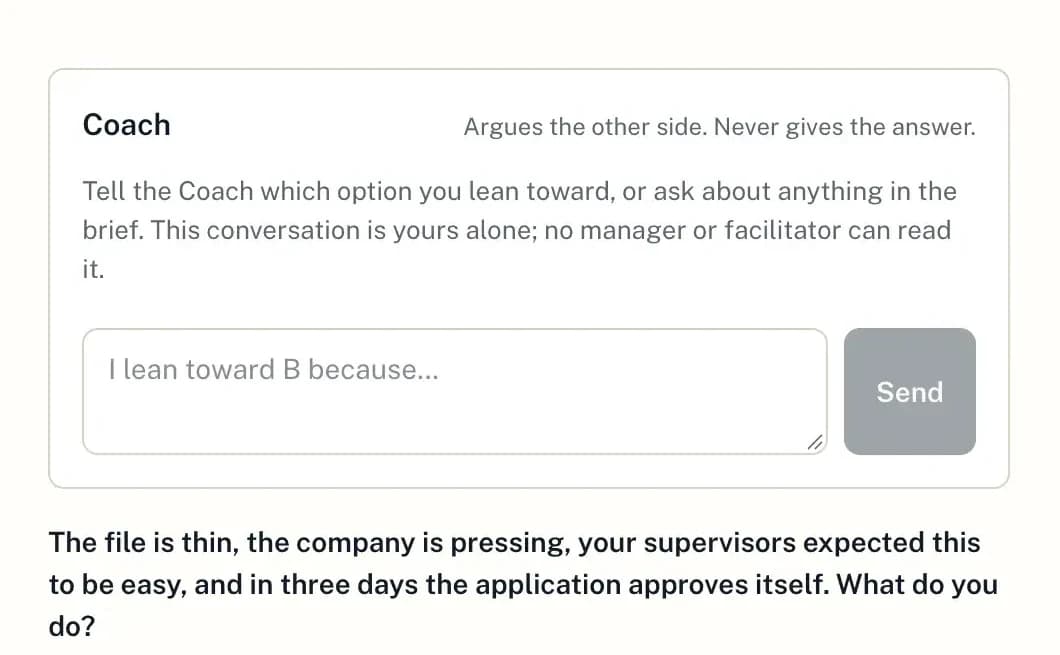
The cases run on the platform between field days. The ending stays sealed until a leader commits, and the case coach argues against whatever they lean toward.
Ways to start
Start with one day, one team, or the year.
A field day
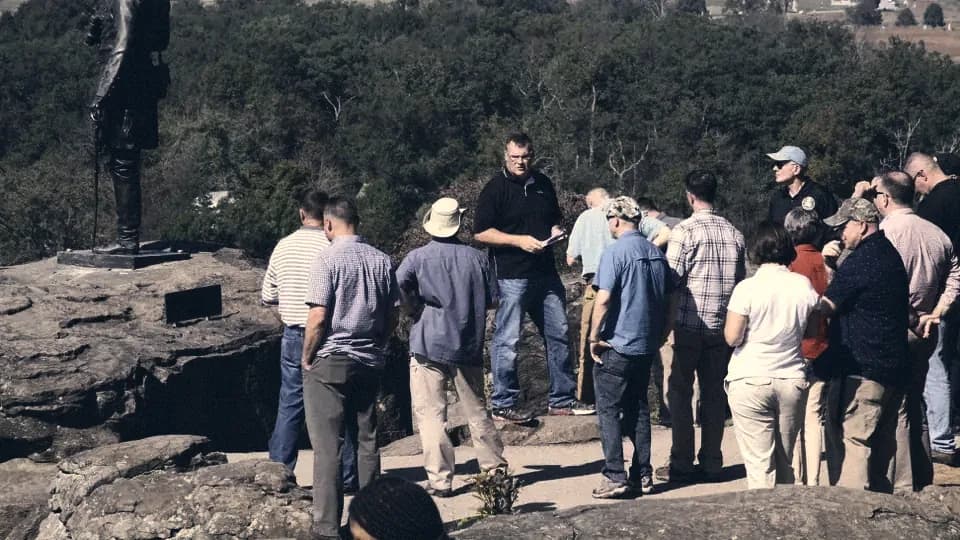
One day for your executive team, at Gettysburg or Antietam, built around one decision you face this year. If you go on to the year within 90 days, the field day counts toward it.
Ask about a field dayA pilot with one team
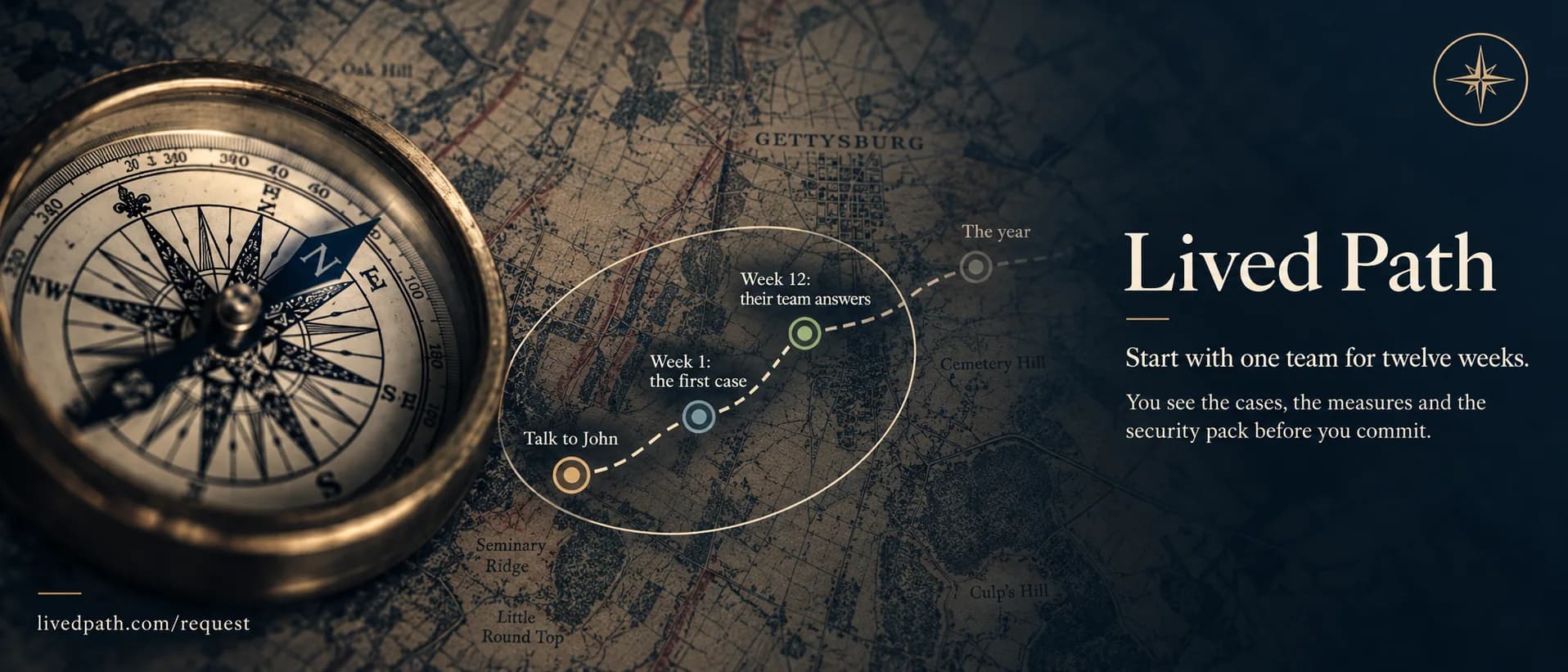
One team, one cohort, twelve weeks. You see the case library, the evidence instruments and the security pack before you commit.
The year
Two leadership retreats, four field days and twelve cases, built for one company and one team.
The price depends on the size of the cohort, the grounds you walk, and whether you start with a field day, a pilot or the year. The scoped proposal states it after the first conversation, before you commit to anything.
Most begin with a pilot. Every engagement is scoped with you.
Bring a cohort into your organization.
One conversation with John, then a scoped pilot with a single team.
John replies within two working days. A brief you can forwardTry a decision